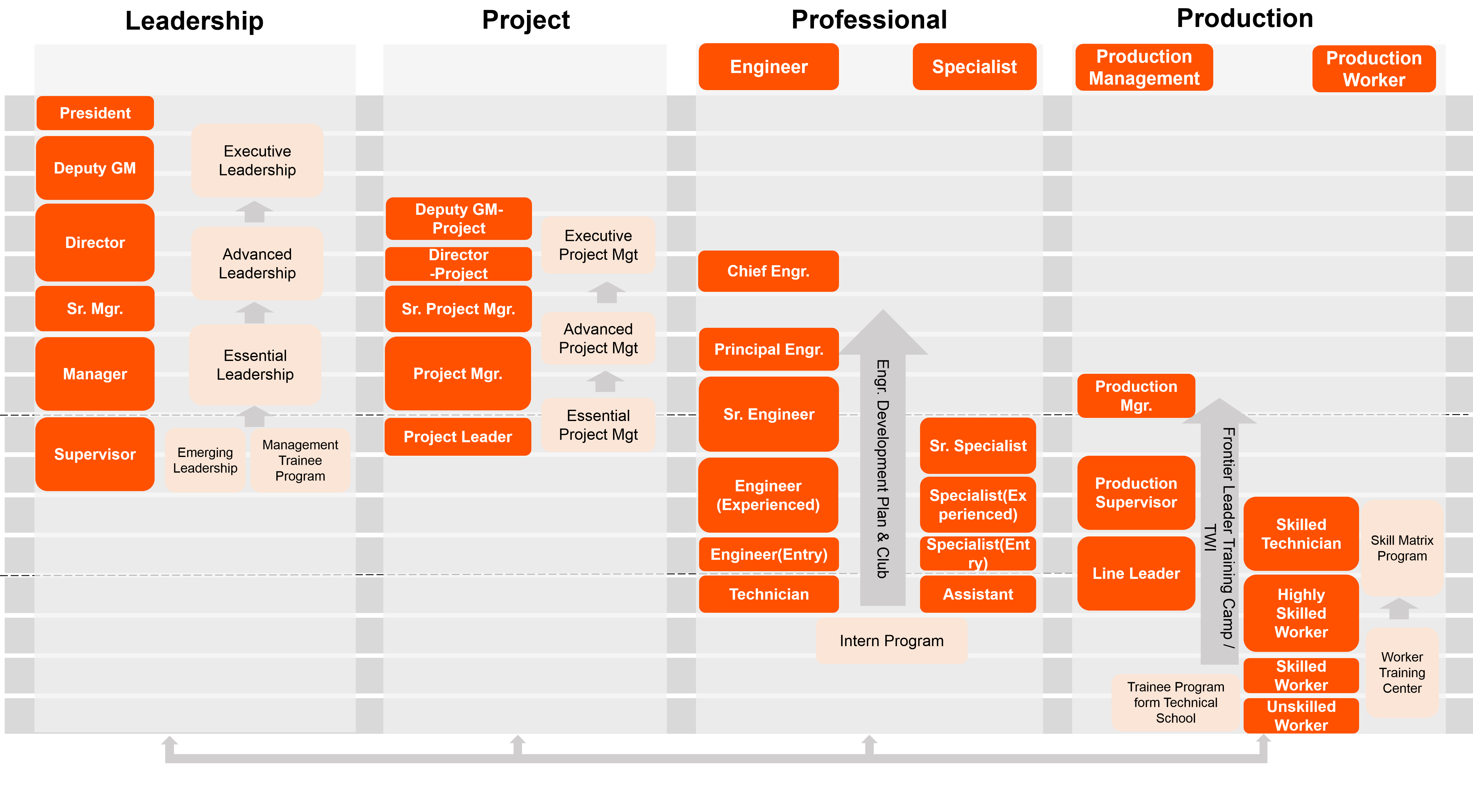
According to their own positioning, advantages and the company's development needs, employees can develop in multiple paths such as management, projects, profession, production, etc., and can give full play to their personal advantages and values to achieve success in career development.
Through the talent development system of four paths of management, project, profession and production, implement talent development projects of different categories and levels, and realize the comprehensive improvement of the company in key links such as talent selection, training, development, use and retention.
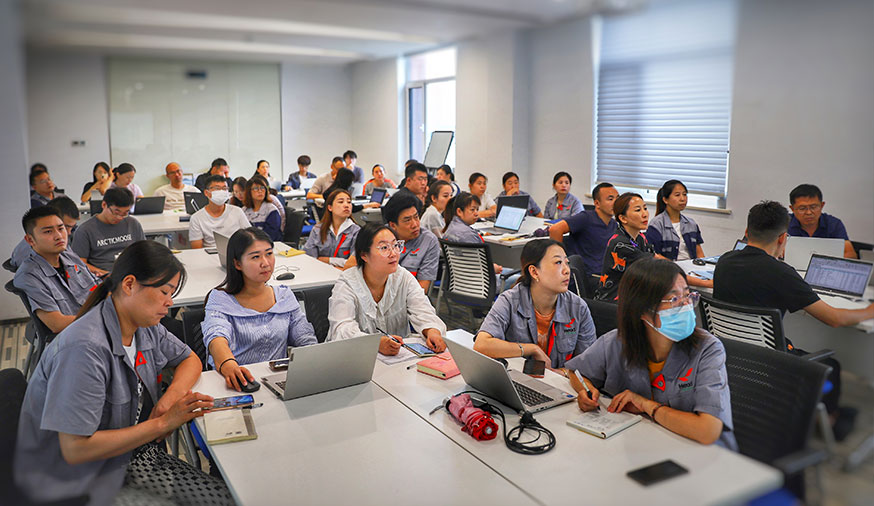
Head has a variety of talent training methods such as curriculum learning, action learning, mentoring, and job rotation, aiming to promote employees to think, learn, and practise what they have learned.

Including online and offline methods, it can effectively improve the professional ability of employees, make up for the lack of professional knowledge and skills, and improve the daily professional problem-solving ability.

Improve the ability to solve problems, and improve the ability to solve systemic management problems by selecting themes, forming teams, team learning, plan review, plan implementation and evaluation.

Being a mentor and being mentored are both ways of training. Being a mentor can improve the control of problems, optimize leadership style, and improve leadership ability; being mentored can gain experience, improve personality, and optimize management methods.

Multi-professional, multi-department, multi-region, multi-level rotation, enrich employee experience, increase cross-industry and cross-department experience, and improve overall work management and control capabilities.